Adventure #14: New York City

Yeah, so this place isn’t abandoned.

But we absolutely had to see Trinity Church, where Alexander Hamilton and several members of his family and friends are buried.

Trinity Church is located, of all places, in the financial district in Manhattan.  It’s absolutely fascinating to see how the city grew all around it and now towers over the church grounds.  It’s also the only patch of green for quite a ways in any direction.  The church building itself was closed for renovations and asbestos abatement, but the cemetery, which reaches on either side of the church, was open.

This slideshow requires JavaScript.

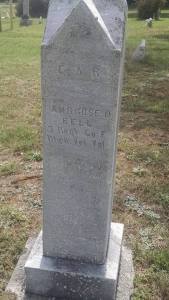
Looking at these headstones was like looking directly inside Tim Burton’s head.  The stones that are still there (a few may have gone amiss in the last 250 years…) are all remarkably preserved, and their Gothic scrawl, complete with spelling that’s more “artistic” than accurate, is incredibly beautiful.  Not to mention the joy of seeing long-winded eulogies and admonishments to the living etched there, filling up an entire stone.

The churchyard includes several famous burials: Alexander Hamilton, of course, as well as his wife, Elizabeth Schuyler Hamilton, and his eldest son, Philip; Hercules Mulligan, who served as a spy for the American side during the Revolution (and popularized by the musical Hamilton), and Eliza’s sister, Angelica Schuyler Church.

As we may have mentioned (once or twice) before, we’re big Hamilton fans, and being this close to the actual remains of these people whose stories we are so familiar with–albeit probably full of creative license, but well-researched by Lin-Manuel Miranda and faithfully portrayed to the best of his ability–was incredibly moving.  Issa has pondered that this is why she has become involved in the Findagrave.com community–while these people in Trinity Church may be well-known and beloved by many people, everyone in every cemetery was once known and loved by someone, and it seems both fitting and necessary to make sure that their final resting places are documented and photographed for those of us still here who care.

Our final leg of this day before our Broadway show began was to stop by the 9/11 memorials.  We quickly found that this was not something we could really stand to look at for very long.  They are beautiful and touching, but wrought emotions out of us that we had carefully packed away from that day in our early 20s.  We took it in for a minute, then left quickly with our sunglasses on, even though the day was overcast.

IMG_20190511_125632366

After our show, we caught the shuttle back to our motel, slept in a bit, and made our way home.  The rainy weather, along with our desire to get home to our families, kept us from exploring too much on the way home, although Issa would have very much liked to visit Pithole, PA if it hadn’t been so out of the way.  Maybe that’s a goal for next year!

Adventure #13: Weehawken, Tarrytown, & Sleepy Hollow

The second day of our trip was reserved for seeing a few places, none of which were properly abandoned, but all of which had rich history.

Our first jaunt of the day was, of course, to head over to the Weehawken Dueling Grounds, where Alexander Hamilton and Aaron Burr famously demonstrated their inability to “use their words” to solve interpersonal conflicts.  Again, not at all an abandoned place, but one that’s important to us and our love of history.

This slideshow requires JavaScript.

After exploring Hamilton Park and taking in the views of the Manhattan skyline, we headed north of the city to Tarrytown and Sleepy Hollow, New York.  We were actually excited to find out that there was actually some abandonment here, thus keeping us within our mission as ghost town explorers!  There is, in fact, much documentation of the rise and fall of many Hudson Valley communities.  As we drove into Tarrytown, we saw a lake with what appeared to be some kind of house…in the middle of it, on its own tiny island.  We weren’t able to find a spot to pull over and take a picture of it without causing a traffic hazard, but we did find an article that has one, here.  The article itself, written by Jorge Fitz-Gibbon, has some delicious history involving John D. Rockefeller manipulating the railroads in the area (because he didn’t like them so close to his estate), which in turn manipulated the lake system and the entire community.  What used to be known as East Tarrytown eventually disappeared due to a change in the landscape and the Rockefeller’s considerable investment to buy the land out from under people and force them to leave.

Additionally, there are other small estates and communities in the area that have gone to ruin, mostly thanks to changing economies.  A local man, Rob Yasinsac, has taken to documenting all of the ruins he can as they slowly get demolished for new development.  He sounds like a kindred spirit, and we wish him luck and safety as he explores abandoned structures!

Tarrytown proper, as well as Sleepy Hollow, are actually not “sleepy” at all, as it turns out.  Both are quaint, bustling small towns, slow close together as to be nearly indistinguishable from one another.  What really sets Sleepy Hollow apart, though, is the cemetery.

In total honesty, we have never seen a cemetery quite like this.  When you have to measure a cemetery in square miles, you know you’re on to something.  Findagrave.com lists over 15,000 interments, but only 53% have been photographed, which means there’s likely many, many more than that.  Many famous people call this their final resting place, including some of the Astors, Rockefellers, and Carnegies, as well as Elizabeth Arden and of course Washington Irving himself.  There was simply no way a person could see the whole thing in one day, especially considering the rolling hills which are tiered with various levels of graves.

This slideshow requires JavaScript.

We were able to find Washington Irving and the Carnegies, as far as famous graves go; Issa was also able to do a little work on photo requests for Findagrave.com.  We barely got to explore the oldest, full-Dutch section close to the front because, curiously, the cemetery closed at 4:30 and we were closely monitored by a security guard as we made our way out (we imagine a lot of mischief might take place in such a large space if they didn’t have tight security).

We were also able to find, in Tarrytown, the monument dedicated to the capture of American Revolutionary War spy Major John Andre.  It was amusing to read up on this part of history, as we both remembered it, but fuzzily.  How fascinating how well he was esteemed by some of the greatest leaders of the Revolution, even in spite of his conviction.  There is apparently also a monument to site of his execution in Tappan, New York, on the other side of the Tappan Zee, adjacent to New Jersey.

Overall, it was a very productive day of our trip.  Next up: the Big Apple!

Adventure #12: Boston Mills, OH

Our most recent adventure took us beyond the confines of our state.  Sara and Issa made their way cross-country to see a Broadway show in New York City (a birthday/Christmas gift for Issa), but we made some stops along the way to find places of historical note.  Some of our stops were more abandoned than others, though.

As we trekked through Ohio on Interstate 80, we found a potential ghost town to investigate, so we got off at the exit for the Cuyahoga National Forest.  We were attracted to the town’s nickname of “Helltown”–a town that vanished seemingly overnight.  A great number of rumors and urban legends sprang up because of the town’s quick dissolution–everything from a secret toxic waste spill that mutated people so the government covered it up to extreme Satanic worship.  Naturally, there’s lots of talk about paranormal activity to go along with it.  Of course, we couldn’t resist checking it out.

It was a quite scenic and enjoyable drive into the woods to get there, but we did discover what was left of Boston Mills (also just called “Boston”).  Actually, several lovely buildings have been preserved, one of which is now a visitor center for the National Forest and a nice stopping/resting point on the Ohio & Erie Canal Towpath Trail.  A general store still stands, selling snacks and gifts, and an old mechanic’s shop has been preserved.  There are still few homes, apparently private residences, which appeared to represent a couple different eras of the town’s growth.

We wanted to sort out the truth of this spot, beyond all the legends, so we started with what is known for sure.  Boston was the earliest settlement in Summit County, OH, founded in the early 1800s.  It began as a mill town and flourished because of its proximity to the Cuyahoga River.  Boston Mills, as a whole, was actually a collection of a few different small townships and villages, all using mills as their economic mainstay.  A railroad was run through the area, which caused it to grow even more.

Unlike other towns we’ve visited, in which the town declined because resources ran out (lumber, mining, etc.), Boston Mills was doing well enough on its own, even into the middle of the 20th century.  What changed was actually a bill signed into law by President Ford in 1974 that enabled the National Park Service to purchase land from private owners and turn it into national park land and recreational areas.  This was in response to (legitimate) growing concern that we weren’t doing enough protect the natural beauty of our country, but the result was catastrophic to the residents of Boston and the surrounding areas.  All private property was acquired through eminent domain very quickly and all the residents left the area, leaving behind their homes, and in some cases farming equipment and other things that were broken or just too bulky to bring along.  We’re sure that this must have made a very eerie sight, all the empty buildings, vehicles, and equipment, and would therefore give rise to some juicy rumors.

Thankfully someone has already gone to the trouble to sort them out.  The Ghosts of Ohio Paranormal Research and Investigation team wrote extensively about it here.  Unfortunately for us, many of the buildings and vehicles left behind have been razed because they were drawing too many curious visitors, trespassing and vandalizing, and the residents who still live in the area were quite bothered by them.  The “murder bus” and the “slaughter house” are no longer there, and as we drove around the area, we saw where they had been because it appears the razing was fairly recent.  Stanford Road is blocked off to any and all traffic, although this is due to safety reasons (road quality and the steep hill that many took too quickly for a rush and got into accidents) and not any paranormal activity.

What is left, of course, is Boston Mills Cemetery.  This is just a quick walk up Main Street a couple of blocks from the main area of the village.  It’s a lovely, small cemetery on a hill, with interments dating back to the early 1800s.

This slideshow requires JavaScript.

The interesting thing is that in one area of the cemetery, where the graves appear to be some of the oldest, the stones appear to have been subjected to a fire.

A quick search online didn’t show anything of note; perhaps we’d have more luck with a local historical society.  If anyone reading this has any information, we’d love to know more!

We completed our look-about by stopping at the Stanford House, which is of course on Stanford Road just before the road closes.  It’s also aligned with the trail, so visitors can stop, use a port-a-potty, and so forth.

This slideshow requires JavaScript.

James Stanford was one of the first settlers in the area, surveying the land and being active in local government.  He built the farm, and his son assisted him in several business ventures in town, including running a mill.  Now the National Park Service owns the property, and it’s available for lodging for both individuals and small groups.  We ate our lunch on the picnic tables there and continued east towards our ultimate destination: New York!

Adventure #11: Federman and Sharon

As usual, the winter months were not the easiest to 1) find the time to go on adventures, and 2) be able to find abandoned places under the snow!  But this year we did manage, after Christmas, and thankfully the weather was relatively nice.  We decided to stay close to home once again, though, since there wasn’t time for a grand adventure like those we usually take in the summer.

We headed west from Sara’s place in search, first, for a place called Federman.  There is actually not much of anything left, and not even much documented online about the town’s existence.  The most we know is that it sprung up at the intersection of the Lake Shore and Southern Michigan Railroad and the Toledo, Ann Arbor, and Northern Michigan Railroad.  It was likely originally called Monroe Junction, which makes sense given its origins.  Even Roadside Thoughts couldn’t really figure too much out about it.

We found what is the likely spot and took a couple of photos.  There really isn’t too much there, and where the actual railroads cross isn’t accessible by car.

Everything around it was just farm land.  As a result, we didn’t really spend a lot of time here.  Still, it was nice to check it off our list.

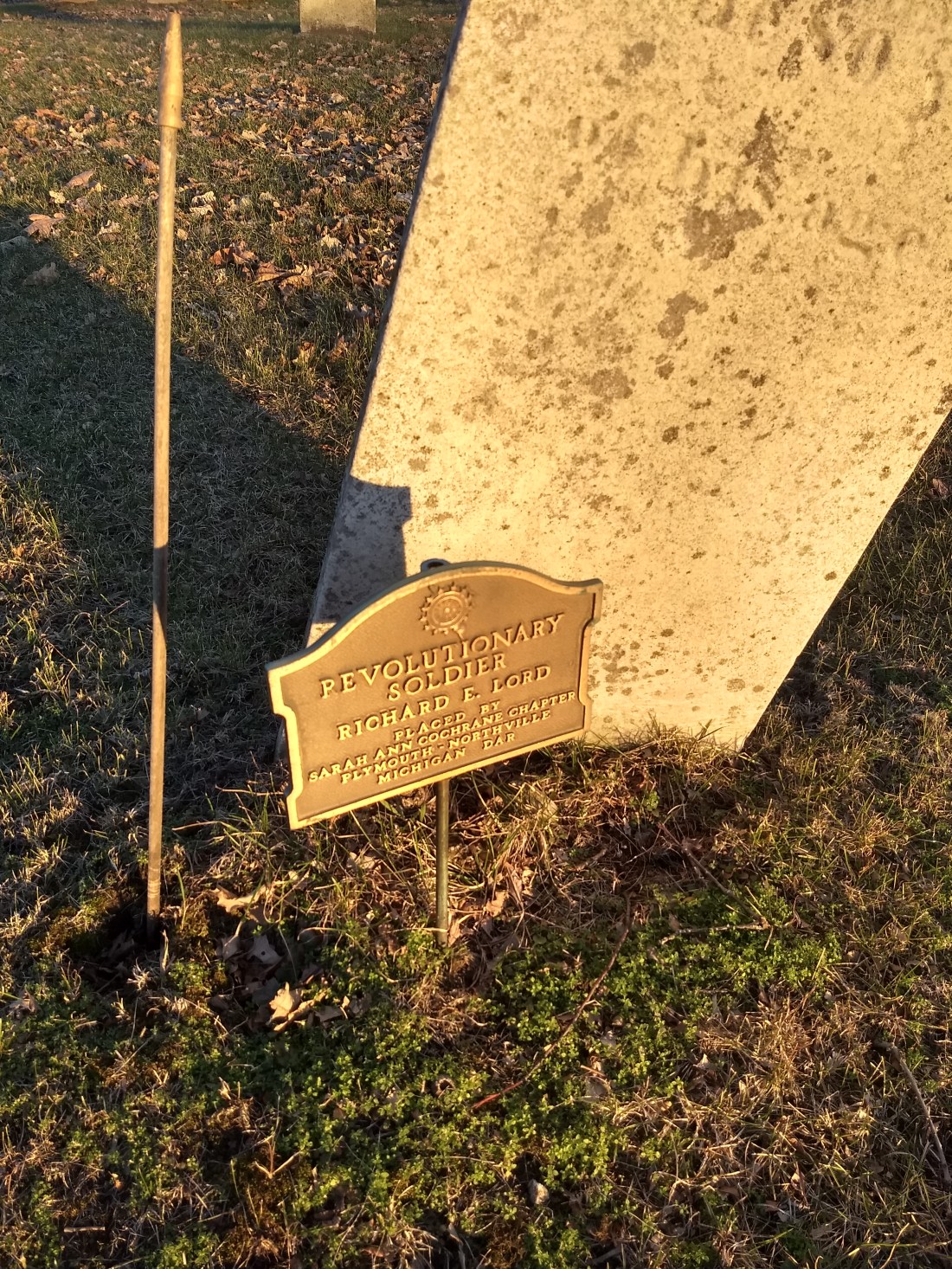
We then carried on north and west to Sharon.  We found Sharon on a list of potential ghost towns in Michigan and decided to explore.  Sharon Township still exists as a governing body, and we were able to locate a few cemeteries.  The first one we encountered was the most intriguing by far–in no small part because we couldn’t figure out what it was called!  There was no sign and it felt very much in the middle of nowhere.  It’s northwest of Manchester at the T-intersection of Sharon Hollow Road and Sharon Valley Road.  It’s got about 260 interments, according to FindaGrave, and most interestingly, one of them was a Revolutionary War soldier!

IMG_20190105_165333024_HDR

Finding this grave struck up our interest in Revolutionary War soldiers in general (assisted, of course, by our mutual love of the musical Hamilton and the fact that we’re just history nerds), so that may become a side quest for us–it seems relatively easy to find the location of known Revolutionary war interments by searching online, so we may start photo-documenting them as we’re able.

We set aside the mystery of who was responsible for this small, unmarked, but remarkably tidy cemetery and moved on to see what we could find of Sharon.  We did locate the town hall and adjacent Sharon Township Cemetery, which appears to be the primary cemetery for the area.

The first thing that strikes a person upon locating this place is the enormous memorial to Abraham Lincoln.

IMG_20190105_170750910

This memorial also included a detailed list of Civil War soldiers from the area who had lost their lives–down to the cause and location of death, in most cases.

This slideshow requires JavaScript.

It was overall a very nicely kept cemetery, a bit larger than the one we found previously, with lots of interments dating back to the Civil War and early 1900’s.  We also found a piece of funerary art that we couldn’t identify, despite our best efforts.  We include it here, hoping someone can help us!

IMG_20190105_171027892

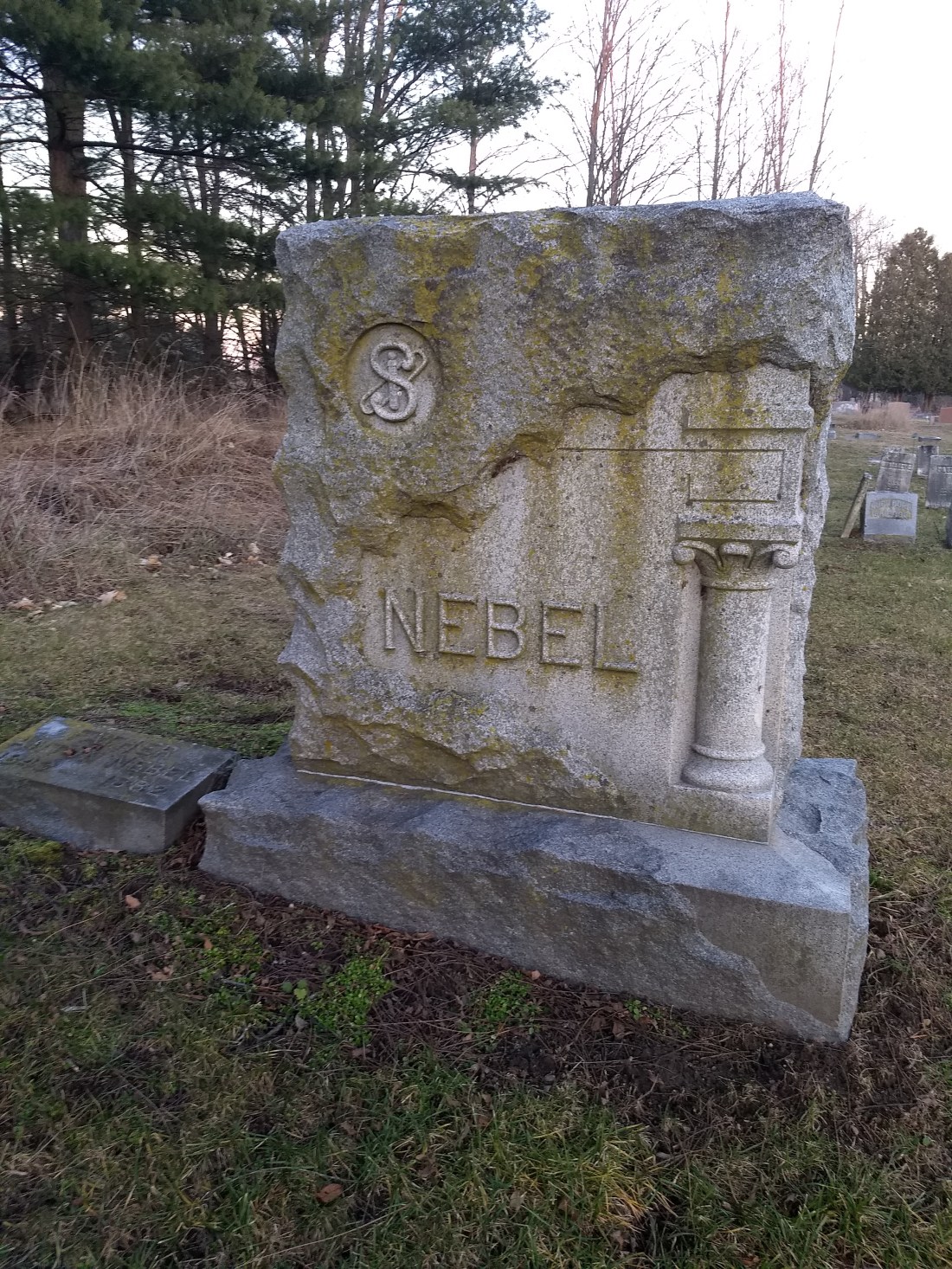
At first glance, the “S”-looking item would appear to be a monogram, but clearly that doesn’t match the surname listed on the stone.  We weren’t able to figure out what the symbol could mean–all help is welcome!

We also weren’t able to find out a whole lot about the history of Sharon online.  Sharon Township is still a relatively “live” area.  At this point, it was getting far too dark to continue, so we headed home.  However, we did contact the Manchester Historical Society to try to figure out the mystery of the tiny, unnamed cemetery.  They responded very quickly, actually, to say that it is called Gillet Cemetery, named for Amasa Gillet, a founding member of Sharon Township.  It’s also called Sharon Hollow Cemetery.  Gillet’s historic farmhouse is apparently about a quarter mile away, although we didn’t encounter it on this trip.  We’re hoping to keep in touch with the historical society to learn more about Sharon!

We were able to snag this one last photo on our way out of Sharon, though:

IMG_20190105_173728328

We have no idea what house this is, but it seemed appropriate to add to our adventure!

Our big adventure this summer is actually not necessarily going to be Michigan-based…we’re traveling by car to New York City!  We’re hoping to find all kinds of interesting things to add to our blog–including things that aren’t necessarily abandoned, but definitely historically significant (I’m just saying, we’re staying in Weehawken, NJ, near the spot where Alexander Hamilton and Aaron Burr dueled in 1804).  We’ll keep you posted!

Adventure #10: Cliff, Phoenix, Delaware, & Mandan

Our goal on this day was to make it all the way up to Copper Harbor (that’s the northernmost point of Michigan, for those not from around here) and then hopefully back down to see some more ghost towns before heading east along the southern part of the UP–perhaps staying in Iron River or Escanaba, we hadn’t really planned.  We knew this was rather ambitious, but we did our best.  We didn’t realize that a lot of time would be spent on the very first stop of the day, though–and in the best way!

So you know we like a good adventure, and you know we aren’t always great at following the rules (because that usually takes all the adventure out of it, really).  We also realize that AAA might put out a bolo on us if we get into anymore antics.  We have also started a list of things we really need to start bringing on our trips–flare gun, machete, water shoes, etc…

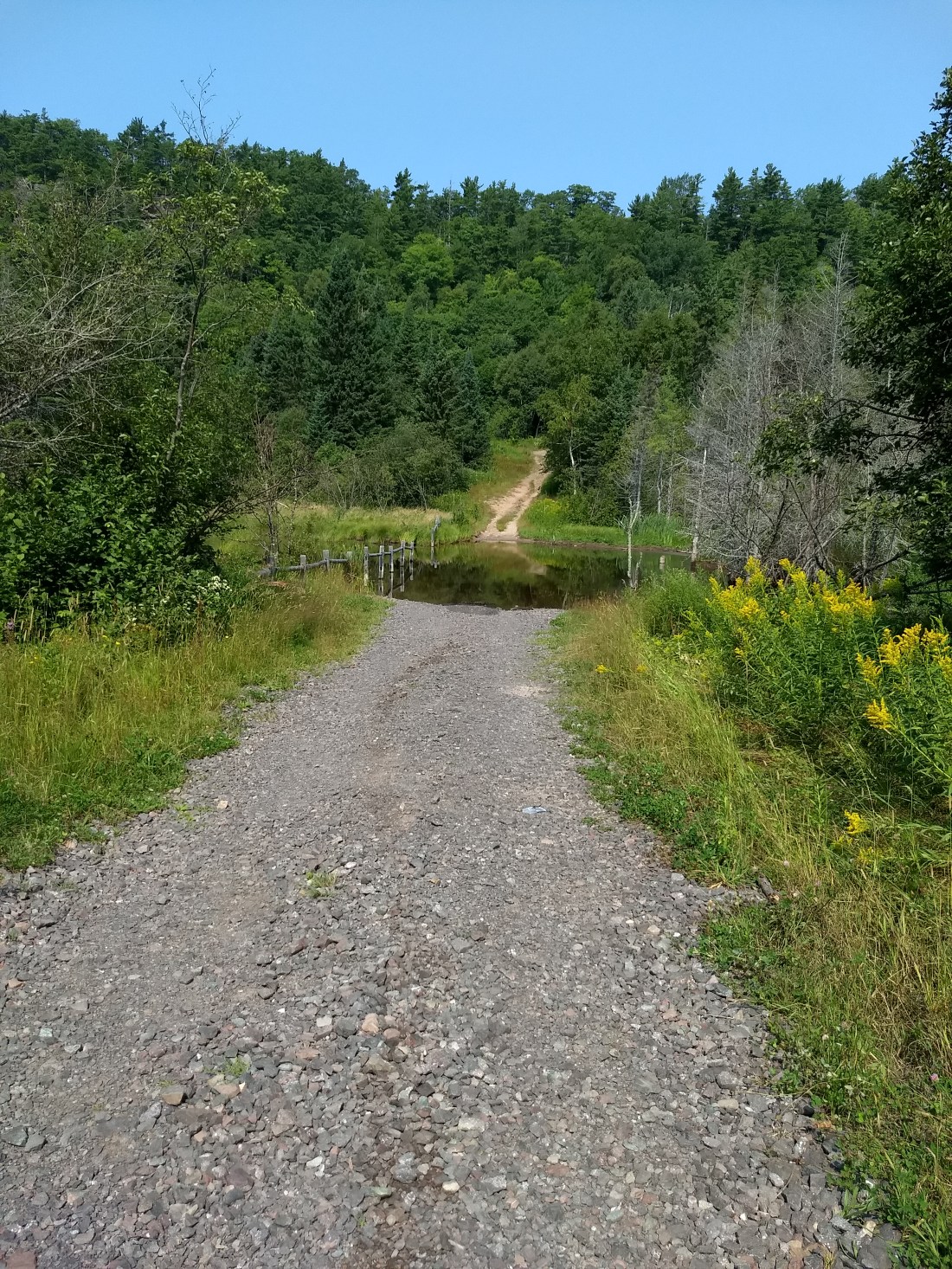
Anyway, our first destination was Cliff, MI, which is not related to Cliffs Shaft, but was also a mining town along US-41.  It’s not very far north of Calumet, and there is very little left of it–no buildings to speak of, just a slag heap here and there.  But we knew there was a cemetery around, and we were bound and determined to find it.  According to our directions, we needed to turn left on Cliff Road, just before M-41 turns into M-26.  We found that fairly simply, and we could see a trail off Cliff Road that seemed to take us right where the cemetery would be.  However, it looked like this:
IMG_20180812_122054989

We had a good laugh at what AAA would say if we called them (again) to tell them we were stuck in a shallow creek in a town that doesn’t exist anymore.

We weren’t really prepared to walk across the water, so we went down the road a bit to see if we could find a way over it.  Sure enough, there was a small footbridge where the creek was very narrow, so we thought it would be easy from there to find the cemetery.

First, we climbed a slag heap, but then realized it didn’t go anywhere and we’d just managed to increase our elevation and not much else.  So we climbed back down.

Then we thought that behind the slag heap there might be a path into the woods to the cemetery.  Well…we were wrong about that too, but that didn’t stop us.

Yes, we made our way through the woods–real woods, no paths, no clear way to anything.  Trees and foliage and brush.  We couldn’t cut around the outside of the woods because the area around the creek was too marshy.  Google Maps says that we walked about a quarter of a mile, but it was probably a lot more than that since we couldn’t take a straight path.  It was definitely up there on the list of not-entirely-rational things we’ve done, but once we were so far in, we were committed.

And we found it.  It was an incredible sight.  The cemetery is dated to around the 1860s and it doesn’t seem like it’s been touched since then.  The only indication that there is even a cemetery there is some run-down, knee-high garden fencing.  There are fallen trees, brush everywhere, just like any other area of the forest…but with headstones.

This slideshow requires JavaScript.

Findagrave.com indicates 43 interments on record…we only saw a handful of stones.  We’d assume vandalism or theft made off with the others, except the location is so remote and hard to access (not to mention it didn’t look like anyone had been there in decades or more), it seems so unlikely.  It’s inaccessible by car, and who would want to carry off a large, antique headstone?  The other possibility is simply erosion.  The entire cemetery is on a slope down the side of the mountain, with a small bluff at the end, so there may have been more stones down there that had slide down over time.  We got pictures of all we could, and it looks like someone else was there five years ago who got a few more than we did.

Of course, after this excitement, we had to make our way back to the car.  It’s times like these that you wish there was better cell service in the UP, because we couldn’t use the GPS on our phones very accurately and we’re pretty sure we took longer getting back than we did on the way in!

It was hard to top that right off the gate, but we pressed on to the nearby Phoenix, MI, which is again one of those little towns that you’re not sure is a ghost town

There were some buildings there still, and some obvious residents; there is a church on the corner of M-26.  There may have been an additional cemetery nearby, but we didn’t find it.

We did, however, turn the corner at that church (M-26, heading toward Eagle River) and ended up finding one of the best-tended cemeteries we’d ever seen.  This doesn’t technically count as a ghost town or anything abandoned, but it was such a delightful stop that we had to share some pictures of the Eagle River Cemetery:

This slideshow requires JavaScript.

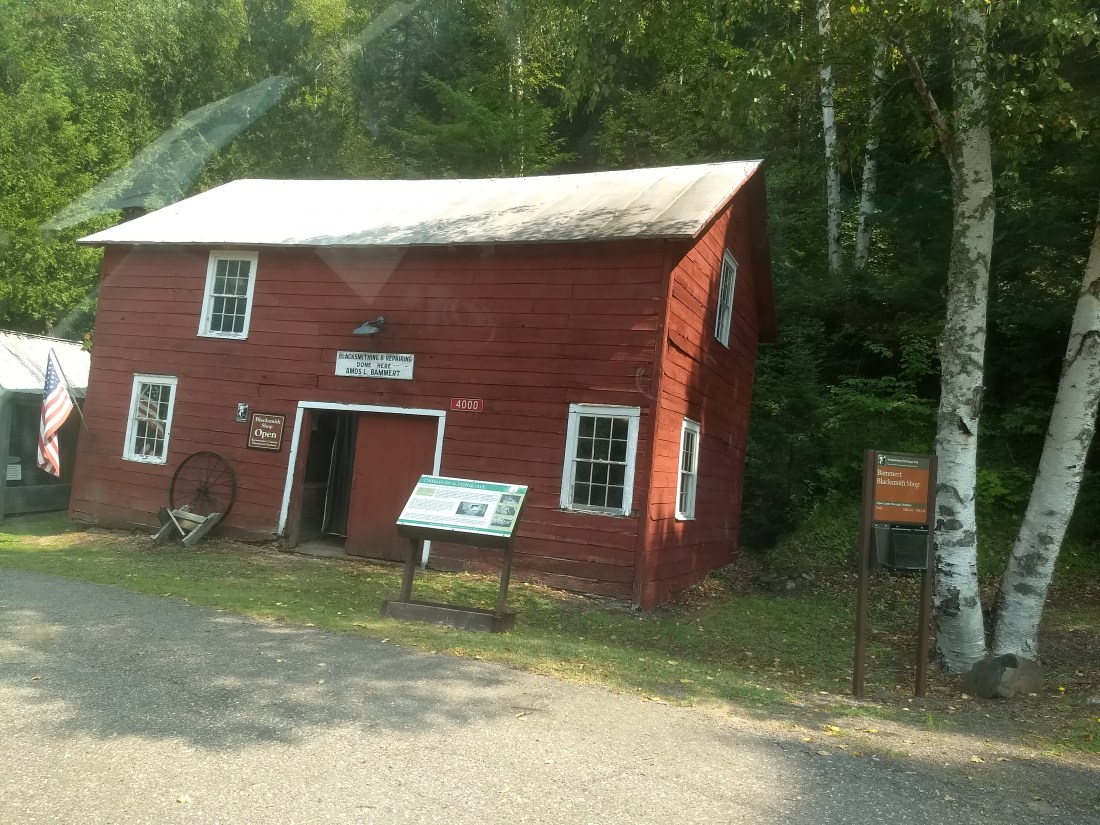
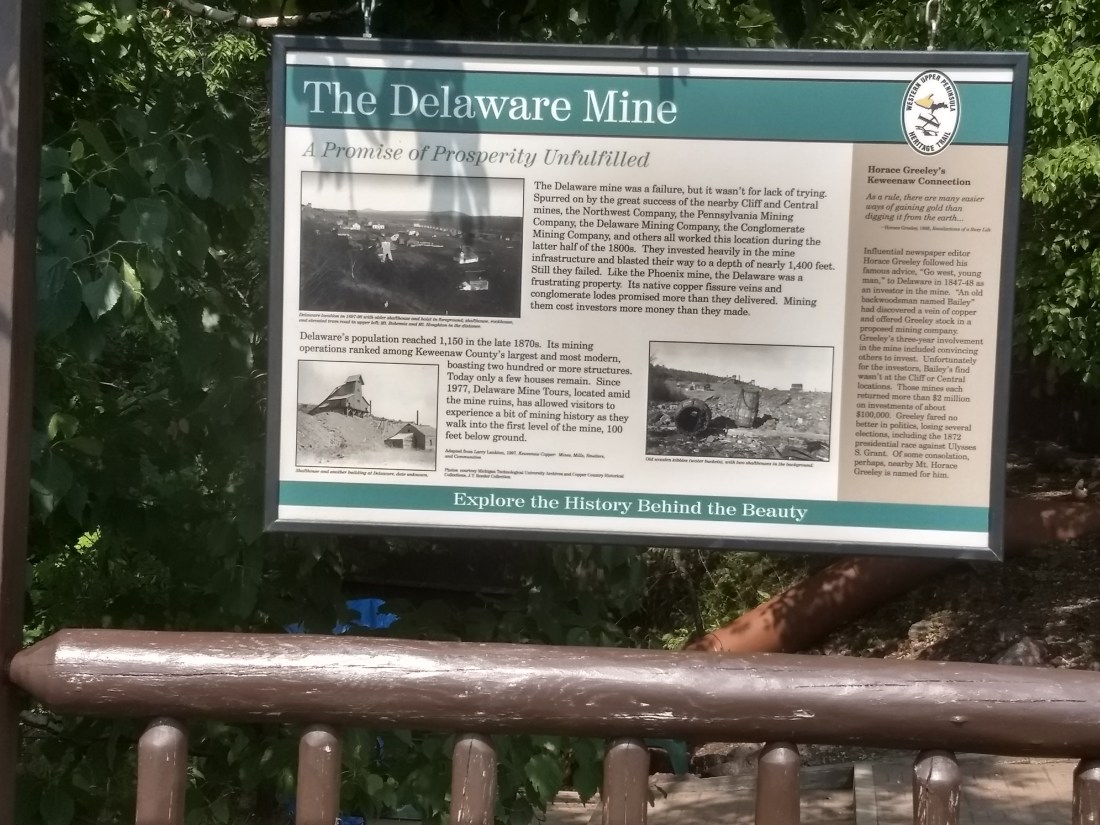
We then headed on to Delaware.  We had heard that there were abandoned buildings there to find, but we couldn’t find much other than the Delaware Mine Museum.
IMG_20180812_140721555

Information gathered at the mine and online showed that Delaware was a town that just never saw its potential fulfilled.  It was founded in the 1840s as one of the first copper mining towns in the Keweenaw Peninsula and grew to a population of over 1,000.  But the price of copper dropped and the mine didn’t have a significant enough output to be profitable.  Many people, including the well-known Horace Greeley, lost a lot of money on the mine.
IMG_20180812_145705311_HDR

After our earlier tromp through the woods, we were a bit exhausted at the thought of clambering around anymore, so we called it good, not venturing into the forest for the prospect of ruins, and decided to continue on.  We did find a couple of houses on the main road on our way north, though:

IMG_20180812_150900460_HDR

There are some pictures of what others found here.  We continued north to Mandan, and we weren’t disappointed!

IMG_20180812_154339969_HDR

As you can see from the above picture, Mandan was easy to find!  Probably one of the easiest we ever located.

According to our research, Mandan underwent two periods of boom before finally succumbing to ghost town status.  The town was originally organized in 1864 to tap into the copper stores running through the area, but it was difficult to extract the ore due to some layers of sand in the soil.  This same soil quality also made it difficult for gardening and otherwise obtaining fresh produce to feed the population.  The mine was closed 1866 and remained dormant for about 30 years, until the Keweenaw Mining Company purchased that and the adjacent Medora mine to try again in the early 1900s with more modern mining equipment.

It proved to be a difficult area to populate, thanks in part to the soil, as previously mentioned, but also due to the inaccessibility of the location.  All supplies had to be brought by boat, but this was only possible May-November.  The winter was a long, hard stretch and deprivation and shortages were very common.

In the end, the mine did not prove to be as fruitful as predicted, and the mining company slowly decreased operations until 1909, when they stopped completely and the area fell into abandonment.

Some of the old building still exist, as well as some stone foundations.  A few have been rehabilitated and appear to be summer homes for people today.  Here are some of the pictures we found:

This slideshow requires JavaScript.

Of course, we speculated about whether these homes had running water or electricity–there certainly wasn’t much going on up here!  But it was a truly beautiful area.

That was our last stop of the day before reaching Copper Harbor.  We had originally planned on getting down to the southwest part of the UP, but we’d spent so much time at Cliff and the other areas that our day was complete.  We ended by driving up to the top of Brockway Mountain to take the scenic way back south and try to get as far east as possible so that we could get home the next day for other things we had to do.

There is still so much to explore in the UP, so we will definitely be making another trip up there to see what else we can find!


Adventure #9: Cliffs Shaft, Baltic, Atlantic Mine, & Boston

Day 2 of our big UP adventure began bright and early as we headed west towards the Keweenaw Peninsula.  We started with a tour of the Cliffs Shaft Mine in Ishpeming.  It really is a great facility, lovingly restored and outfitted with exhibits about mining–not just at Cliffs Shaft, but other nearby mines like Empire and Tilden.  As a bonus, the local rock and mineral society has its exhibit there, too, featuring all kinds of artifacts mined in the area (in addition to those from elsewhere).

We got to go into the mine itself, led by a garrulous guide whom we have dubbed “He Who Should Stop Talking.”  This is just the entry shaft that takes you to the cage area, where miners and equipment would come in and out.  The shaft itself has been capped with two feet of cement, so really this area just resembled a large box more than anything else, but it was interesting to hear the history of it.

The mine was started in 1879, after some exploratory drilling, with two shafts.  Back then, the town around it was called New Barnum.  In 1919, the owners decided to replace (well, actually cover) the old wooden headframes over the shaft with something more attractive, and thus the distinctive Egyptian Revival concrete obelisks were created.  They stand 96 feet tall (although one is a little shorter, having sunk into the ground somewhat).  In the 1950s, C shaft was added in between the two original shafts.  This one looks much more modern and much less artistic.

This slideshow requires JavaScript.

The whole mine was capped in 1967 once it became unprofitable, and the whole area was left to ruin.  Then local citizens, including former miners, asked the Cleveland Cliffs mining company if they could have the property to renovate into a heritage museum.  The museum now celebrates its 15th anniversary this year!  More information about the museum may be found here.

We spent a bit longer at Cliffs Shaft than intended–we had lofty goals of getting to Calumet that night and seeing several ghost towns along the way, so we chose to bypass Greenwood (outside of Ispheming/Negaunee)–in particular because it didn’t look much like a ghost town–and head straight to the next on our list, which was Baltic.

Baltic, or what’s left of it, is about six miles southwest of Houghton on M-26.  Our research shows that it was a mining town producing copper ore starting in the late 1800s.  Unfortunately, by 1931, the mine had given up all that it could, and it was shut down.  The town’s heyday was in the early 1900s, with a population recorded at 3,000 by 1918, and they had their own post office, general store, and physician.

We found some old mining buildings, as well as foundations hidden in brush.

This slideshow requires JavaScript.

Not too far down the road, headed towards Houghton, was Atlantic Mine (we marveled on this trip about how literal all the names of things are in the UP).  This town still has residents, but bears a lot of the vestiges of earlier mining years.  The first building we encountered was St. Mary’s Hall, built around 1885 and still used today.  You can also see some sort of mining relics further back on the property.

The town itself was settled around 1865 and was a very functional, full town at its peak, with a saloon, an opera house, a butcher, and more.  However, the mine was only ever modestly profitable, and the town started into decline in the 1930s.

We also got in our first cemetery of the trip, and it did not disappoint!  What we hadn’t realized was how much our Upper Peninsula was populated by people from Finland, Sweden, Italy, and Cornwall (although we knew about the Cornish presence from the prevalence of pasties).  The vast majority of the cemetery was Finnish, with some headstones actually inscribed in that language (we had to look up the words, most of which were words like “mother,” “father,” “husband,” and “wife,” as well as some scriptures).  The cemetery had some newer interments, but many were older and ran in families.

This slideshow requires JavaScript.

On the way out of town, we also found the original post office and fire station.  A couple of the original churches are also still in town.

While not a ghost town, per se, we did swing by the Quincy Mine ruins, north of Houghton/Hancock.

This slideshow requires JavaScript.

Our last adventure of the night before getting to our hotel in Calumet was finding the “town” of Boston (also called Boston-Demmon).  This area is north of Houghton on M-41; you take Boston Road off of that to find it.  According to our research (and it was hard to find very much), it was possibly a logging town.  There is very little left there; just a few residents and a couple of ramshackle buildings.

There is a road sign to a town called Salo, although that apparently no longer exists due to a massive fire.  We didn’t take the time to investigate if there were any remains; we did find one or two pictures online of a township hall.

The area’s big (literally) claim to fame is as the home to “Big Louie,” AKA Louis Moilanen, a young man who lived there and worked in the local mines.  He grew to 8 feet four inches tall and weighed over 450 lbs. when he passed away at age 26.  Apparently one of his suits is on display in Calumet.

At this point, we were quite exhausted from the day’s adventure and made our way to our hotel for the night.  And as a highlight of our trip, we headed over to Gay, MI to have dinner at the Gay Bar.

IMG_20180811_210056278_HDR

Little did we know what would be in store for us the next day…

Adventure #5: Glen Haven, Aral, & Jacktown

We survived the night in our seedy motel, which was all that was available in Traverse City on Labor Day weekend, and headed west, deeper into the Leelanau Peninsula.  We had a couple of spots marked on the map that we definitely wanted to see.

Our first stop of the day (after breakfast, of course) was Glen Haven, which is part of the Sleeping Bear Dunes National Lakeshore.  Glen Haven isn’t the type of ghost town we traditionally visit; while it is an abandoned town, a few of the buildings are now maintained by the State and are on display for the public.  It’s part of the trails that run all through the area and makes a nice stop for hikers, bikers, or people just passing through by car, like us.

This slideshow requires JavaScript.

The place has the old canning factory, which now houses several types of boats and lighthouse paraphernalia; it’s also a good place to get some literature about the area, and/or get a lesson on it from one of the park rangers.  There’s also a general store (which unfortunately was closed when we went) and a working blacksmith’s shop–there was a demonstration going while we were there.  Also, a few old houses, some of which have interesting signs discussing the home’s past.  It was definitely worthwhile to visit, if nothing else to take in that unforgettable view:

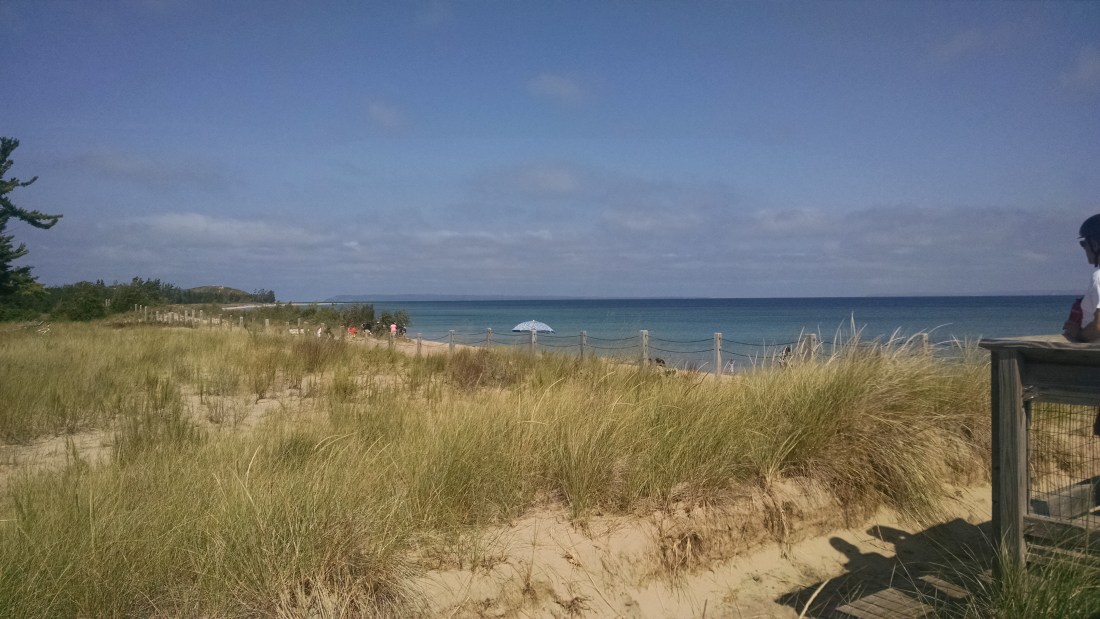
IMG_20170903_114806670.jpgWe may be a little biased, but Michigan dunes and lakeshores are honestly among the most beautiful in the world.  From this point, you can get a good look at the Manitou Islands–which we also read had some ghost towns on them, so next year’s trip is already in the making!

From there, we headed towards Aral, which we read about in a pamphlet at Glen Haven.  Unfortunately there isn’t much there.  It’s south of Empire, off of Esch Road…and apparently that’s all it is.  A road.  So nothing worth even taking a picture of, unfortunately.  We moved on.

Finally, we made one last stop in a place called Jacktown.  There is very little left of it here; the research we found is that this is just another one of those little company towns that sprung up with the growth of the lumber industry and the railroad, and died off just as quickly once the area was logged out and the railroad was dismantled.  It’s near Empire, in Leelanau county, although crossing the road takes you right into Benzie county.  To find it, we headed south on state road 677 and then turned left on Oviatt/County Line Road.  According to a few different online sources, there may be some old foundations of buildings still around in the woods, but we thought the better of exploring too much off road, since there appeared to be a relatively active lumbering site there, and there were sounds of gunfire echoing in the woods.  We stuck to locating Bland Cemetery, which is the only real remain of the town.

The cemetery is so tiny–only 18 interments on record, and not all of those appear to have stones.  The cemetery was established in 1868, and the last known burial here was in 1926, although the majority were in the late 1800’s.

IMG_20170903_140010317

As usual, Issa tried to be helpful and take pictures of anything that needed to be added to Findagrave.com, but as previously stated, not all of the headstones were there, and all of those that were there had already been posted to the website.  On Findagrave.com, there appeared to be a lot of work done to really flesh out what we know about these people–death certificates, etc. were all uploaded, so it was interesting to read the entries.  One of the most fascinating ones we read caught our eye, for one thing, because of the name: Idonia Melvina Bolt Van Wormer-Verno.  I mean, how do you even fit that on a headstone?  Apparently you don’t, because it was nowhere to be found.  An elaborate write-up on her family tree is posted on Findagrave, and the last paragraph is the most intriguing:

Four days before her death, Melvina married Paul Verno, Sr.  He buried her in a secret location that remains a mystery to this day.

(This, after having having eight or nine children and then living as a widow for some time).

So, according to record, she is supposed to be in Bland Cemetery, but there is no marker with her name on it.  She was only 42 when she passed away.  None of her children, her first husband, nor her second husband are buried there.  A quick search located Paul Verno’s grave in nearby Empire, in the St. Phillip Neri Catholic Church cemetery.  Of course, he’s also listed there as having three possible wives, some of which were concurrent, so we’re unsure what the real truth is behind this family.  Some real intrigue, though!

Here are some photos of other stones we saw there.  Most were quite simple:

This slideshow requires JavaScript.

Lots of Blands, Ames, and Huff families represented here.

As the sounds of rifles shooting in the woods were getting louder, we thought it was prudent to leave!  We made our way home, stopping in Cadillac at Mr. Foisie’s Pasties, which were excellent and we highly recommend them!  A bit of fudge from Gramma’s Treats in Baldwin might have also been consumed en route *smile*.

Overall, it was an excellent adventure–so much we saw and learned!  We can’t wait for the next one!

Adventure #4a: Brookside, Summitville, & Nirvana

We headed out bright and somewhat early on September 2, 2017 from Big Rapids, hoping to find some interesting spots on Highway 10.  There were several indicated on the map we accessed from http://www.ghosttowns.com, and we found one that wasn’t included on there–Nirvana (which is apparently pronounced by the locals such that the “van” rhymes with “can” rather than “con”–apologies to Kurt Cobain).

Brookside was more or less nonexistent; there was nothing even to photograph.  Summitville was similarly empty, except for a long, winding road that included several sandy hills:

IMG_20170902_114528959

We drove down the road a ways, noting that only a few people were there apparently camping, and there were a couple of residences down a private drive–nothing visible from the road.  So we headed back to M-10 and proceeded west.  That’s when we found Nirvana.  And by “found,” I mean there was a sign that said “Nirvana” (which we missed the first time we passed it) and a boarded-up church.

IMG_20170902_115256264_HDR

We thought there might be a cemetery near the church, so we hunted around on Google Maps and finally found it–Cherry Valley Township Cemetery, off of Knight Rd.

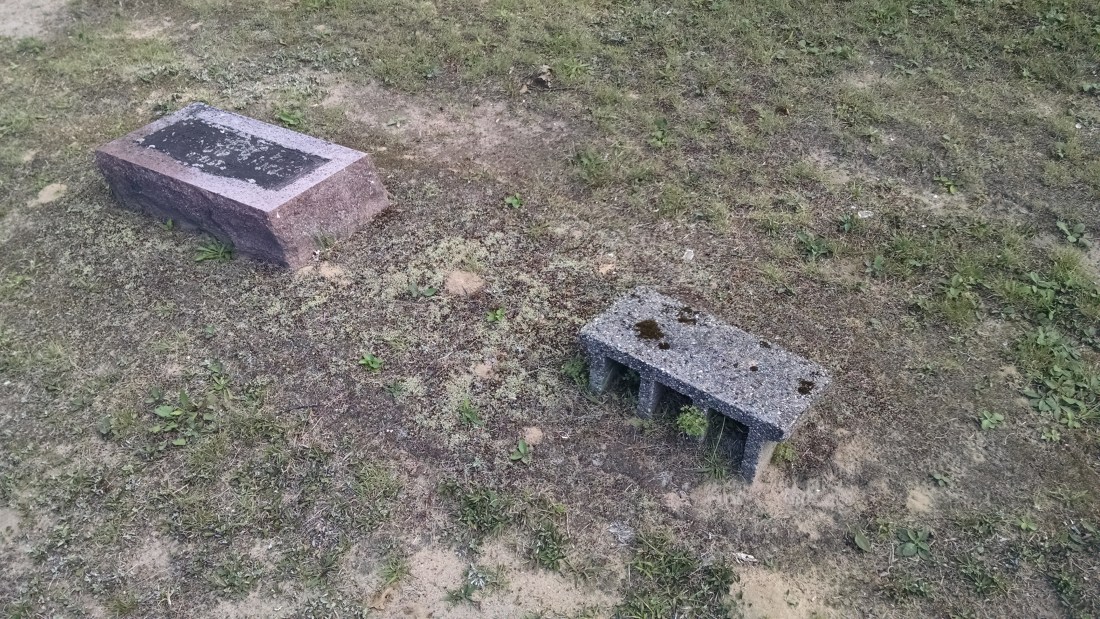
This was one of the odder cemeteries we’ve ever visited; for one, there were lots of missing stones, stones with missing dates (when the person is obviously no longer living), or strange stand-ins for stones, like this cinder block:

IMG_20170902_120718075.jpg

Or a basket of fake flowers with a nametag in it.  Or just a plain wooden cross with no name on it.  That sort of thing.

There were many World War I veterans in this cemetery; we assume that’s when the area was still thriving.  There were some newer interments, but mostly older ones.  Family names like Fray and Avery.

This slideshow requires JavaScript.

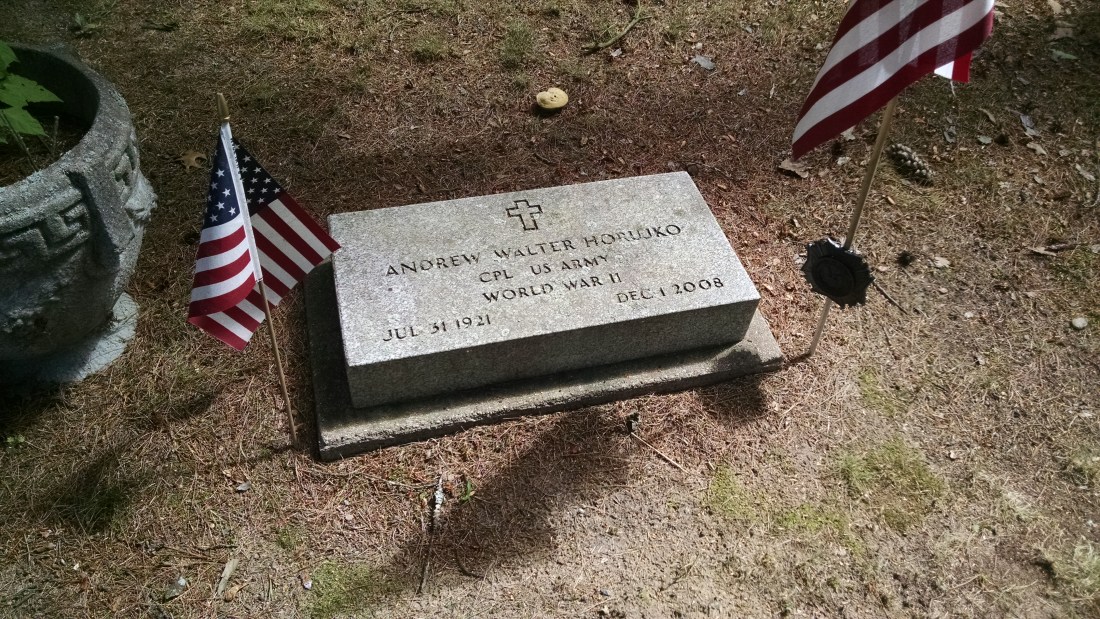
Then something really remarkable happened.  As we were getting ready to leave, an older couple came into the cemetery to tend a plot of graves.  They were very friendly, pulling up behind our car (since there’s only one drive, we asked if they needed us to move, but they cheerfully declined).  After a few minutes, they realized we weren’t there for any specific person and asked us, not in any kind of suspicious way, what we were up to.  When we told them, the older man got really excited and asked, “Have you ever heard of Andy Horujko?”  When we said we had not, he led us over to a grave and started to tell us quite the story.

IMG_20170902_124214174.jpg

Andrew (Andy) Horujko was a World War II veteran who died in 2008.  He lived in the area and was known as something of a recluse.  He didn’t own a car, never married or had children, and they weren’t even sure he owned a phone.  He kept to himself, caring for some cattle on his property.  His claim to fame?  Walking from Anchorage, Alaska to the southernmost tip of South America back in the 1960s.

“Do you want to see his homestead?” he asked us.  Of course we did!

So we hopped in the car and followed them as they drove us even deeper into the middle of nowhere (because following random strangers into the mostly deserted wilderness to see an abandoned house is a perfectly rational thing to do).  We pulled up to a property that was lined with very close-planted pine trees, which formed a visually impenetrable wall.  Through the single opening in the driveway (such as it was, quite grown over), we could see a cabin-style house with the windows boarded up, a couple of barns and other outbuildings.

This slideshow requires JavaScript.

Upon a little more research, we found out that his great walk across two continents wasn’t his only achievement.  He finished near the top of his class at Michigan Tech and worked as an aeronautical engineer for one of the Wright brothers, and he was a member of the Michigan chapter of Mensa.  So, a legit genius.  Apparently, his walk was meant to protest the automobile industry and the pollution it causes.  Here’s a press photo we found of him online: https://outlet.historicimages.com/products/dfpy12415

We also read this account from someone who met him later in his life, in what appears to be a rare excursion for Mr. Horujko: http://theportableschool.com/MMMDI/RealWalker.html.

This really gets to the heart of what we’re trying to do when we go on these adventures: we love to hear (and in this case, even see) the stories of our amazing home state–the more personal, the better.  We had never even heard of this man or his achievements, and all of a sudden we were standing in front of his house, learning about him from people who knew him personally (the older couple who led us to him were his neighbors and knew him as much as anyone did, given how much he kept to himself).

You’d think this would be the real feather in our cap and our way to end the day.  But even more was in store!  All this, and we hadn’t even had lunch yet!  We were passing through on M-10 trying to get to Baldwin, MI, in Lake county, so we could head south to another ghost town on our map, but we were quite pleasurably detained at a small place we encountered on the way called Idlewild…

Adventure #3: Delta Mills, Vickeryville, & Butternut

It took a year, but we were finally able to make it out again and travel our great state of Michigan in search of ghost towns (and whatever else of interest we managed to find).

Issa and Sara set out on September 1, 2017 in search of adventure and abandoned things.  Our first stop was Delta Mills, just northwest of Lansing.  Since Issa was born and raised in Lansing, this was a fun stop for her!

Unlike a lot of other places we’d been before, this one is not at all out of the way.  Lansing suburbs have encroached a great deal, and now Delta Mills is almost seamlessly connected.  To find it, take the Creyts Road exit off of highway 496 and head north until Creyts turns into Webster Road–then, make a right at Delta River Drive.  On that corner, you’ll see the closed up mechanic’s shop, and as you proceed down Delta River Drive, you’ll see an abandoned barber shop and general store.  The church, however, is still active and is a beautiful old building.

IMG_20170901_163343140

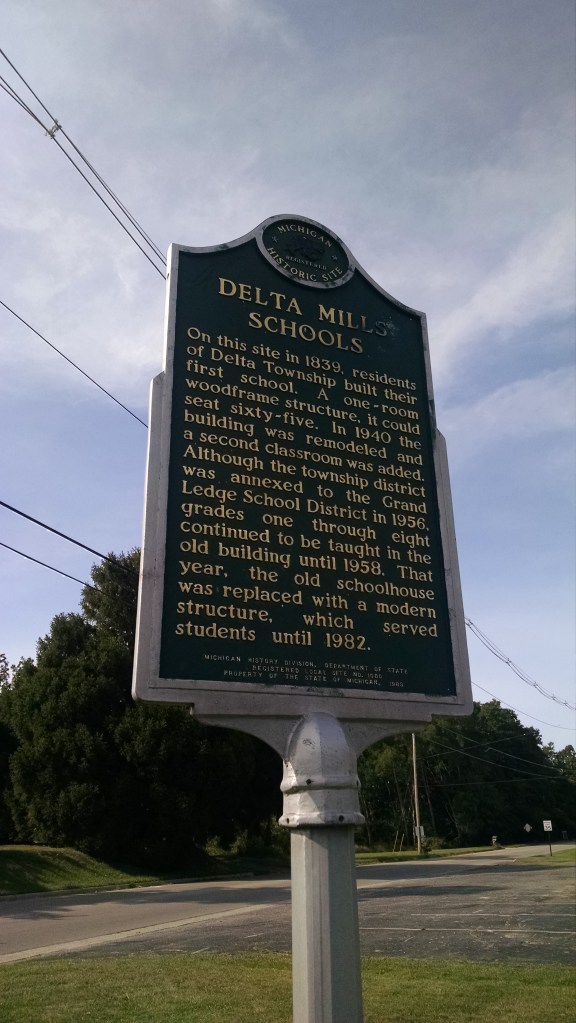
There’s an historical marker on the corner of Delta River Drive and Ingersoll Road that notes where the old school used to be.  It’s since been torn down, unfortunately.  Just a few yards down Ingersoll Road is the Ingersoll homestead, which is a gorgeous white home.  Erastus Ingersoll was the founder of Delta Mills.

IMG_20170901_163519640

Further down Delta River Drive is Hilltop Cemetery, which has so many familiar names if you’re connected with the Lansing area.  For one, the Creyts family (hence the name of the road) and of course the Ingersolls (note: we learned on this adventure, and the ones that followed that weekend, that “Erastus” was apparently a really common male name in the mid-19th century).  We also saw a lot of graves designated with the names “Throop” and “Jarvis.”  Issa recognized several of these names as teachers and classmates she’d had growing up in the Lansing School District.

This slideshow requires JavaScript.

We learned a lot on this trip about funerary symbolism.  So many of the older graves had significant depictions on them–willow trees, clasped hands, palm fronds, doves, and also symbols attached to fraternal organizations, like the Odd Fellows.  The Cemetery Club explained a great deal to us!

The Michigan History project has done a wonderful job researching and writing up the history of Delta Mills (also known as Grand River City).  We found this website after visiting, and it shed so much more light on the area!

After we were done at Delta Mills, we headed northwest to Montcalm County to visit Vickeryville and Butternut.  These two are off of M-57, which we accessed by heading north from I-96 on M-66, then heading west on M-57.  Vickeryville is well-marked–there’s a sign from M-57 that points you in the right direction down Vickeryville Road.

The most obvious landmark is the Central Bean and Grain mill and accompanying storage shed, each on its own side of the road.  Both are open to the elements, although we wouldn’t recommend venturing in–for one thing, they’re private property; for another, the mill in particular doesn’t seem too safe to enter.  There was a light breeze as we walked around the perimeter, and even that was enough to cause parts of the mill to squeak and groan.

This slideshow requires JavaScript.

Continuing further down the road, we found the old church, which is still active; there is also an Old Order Amish settlement nearby (which we didn’t photograph, out of respect).

IMG_20170901_190725683

Then, it was on to Butternut!

This was one was tougher to find.  There’s less left, and it’s well off the main road.  We continued east on M-57 just a short ways from Vickeryville and turned left on Main Street.  We missed it the first time.  Doubling back, we turned west on a road that appears to have a few names…Google Maps calls it North Butternut Street, but the street sign disagreed.  It’s a short, dead-end road that actually sort of loops back and connects with North Street (perhaps unofficially, though…it was a moment of off-roading for us in Sara’s Prius!).  We found a large barn-like structure and an old mechanic’s shop, both heavily foliaged by this time.  There might have been more further down, but the road officially ended and was then marked as private property, so we kept out.


This slideshow requires JavaScript.

By this time, it was getting quite late, so we headed north to Big Rapids and found lodging for the night.  Shout out to Quality Inn–basic, no-frills facility with a really friendly staff!  We did begin to question our thinking of just getting a hotel room wherever we happened to land each night…it being Labor Day weekend and all…but thankfully this place had a room and excellent customer service to boot!

Adventure #2: Star City and Podunk

On our way home from Mackinac Island, Issa, Sara, and Issa’s mom decided it would be great fun to find more ghost towns, since we’d had such success with Pere Cheney.  We used a website we found that helped us identify a couple more that weren’t too far out of our way: Star City and Podunk (yes, Podunk).

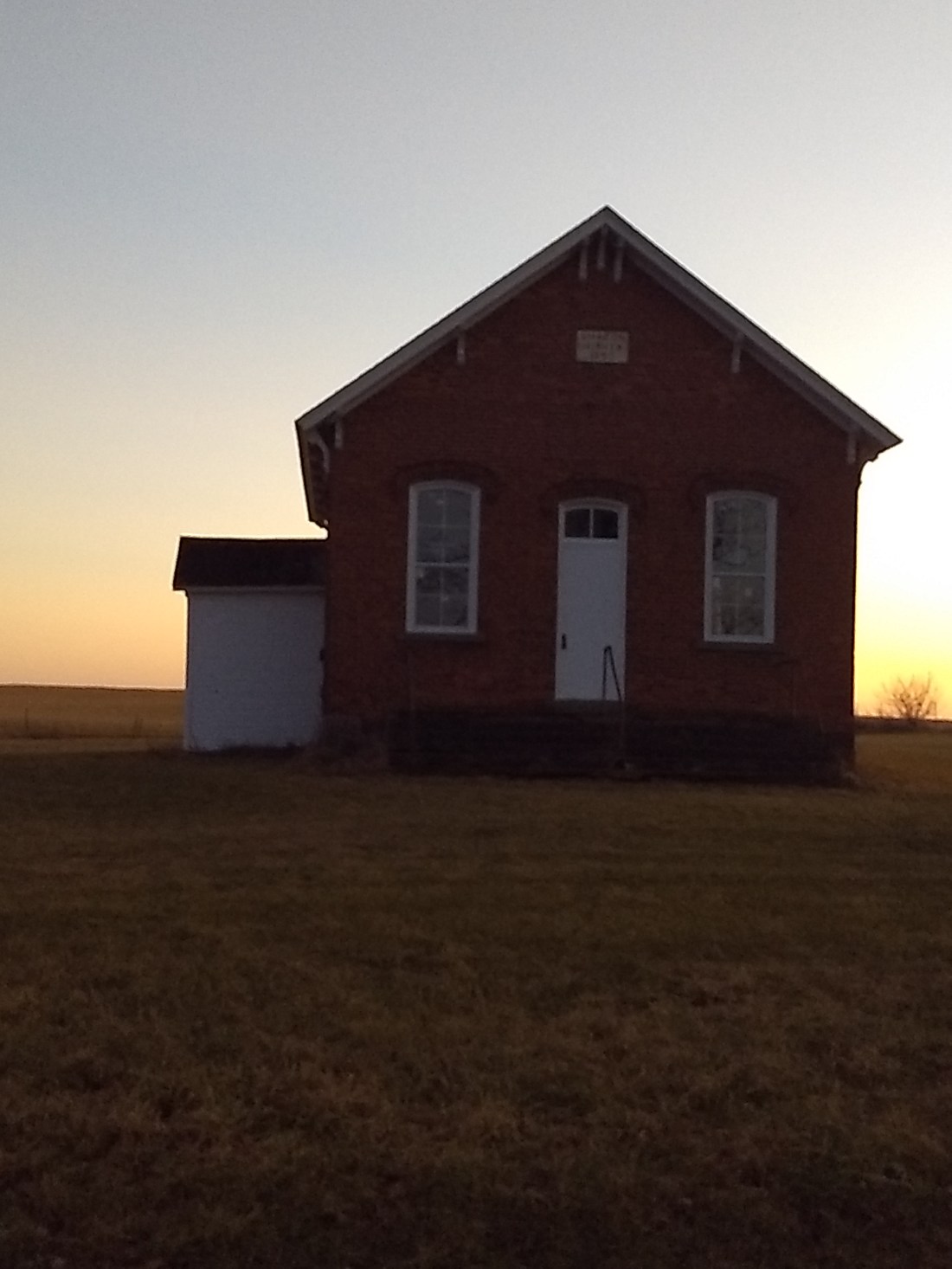
Star City is west of Houghton Lake on M-55, about 5 miles.  Turning north on Star City Road, the cemetery is on the left, and the one remaining structure, an old school building, is a bit further down on the right.  The school building is located on private property, so we were only able to photograph it from the road without exploring much:

14291755_10210079527522729_3006874558487153600_n

The cemetery is easily accessible, though, and has both Civil War veterans and more recent burials as well.

14232401_10210079527762735_7064639869996168651_n

It’s hard to find much information about Star City’s origins or its demise, other than it was first set up with a post office in 1872 and called “Roy,” and later “Putnam” when the post office changed hands.  Then, in 1885, it was officially named Star City, and the name continued until 1923, when it was disbanded.  There is a story that the entire area was first known as “Starvation Lake,” after a trapper who was found dead in his cabin from apparent starvation.  Whether this is true or not is unable to be verified.

After this, we made our way south of Houghton Lake to the real, actual Podunk,  MI.  Located on the corner of Ziemer Rd. and Shearer Rd. off of M-18 in Gladwin County.  There’s even a sign!

14291889_10210079526362700_8798281830905290994_n

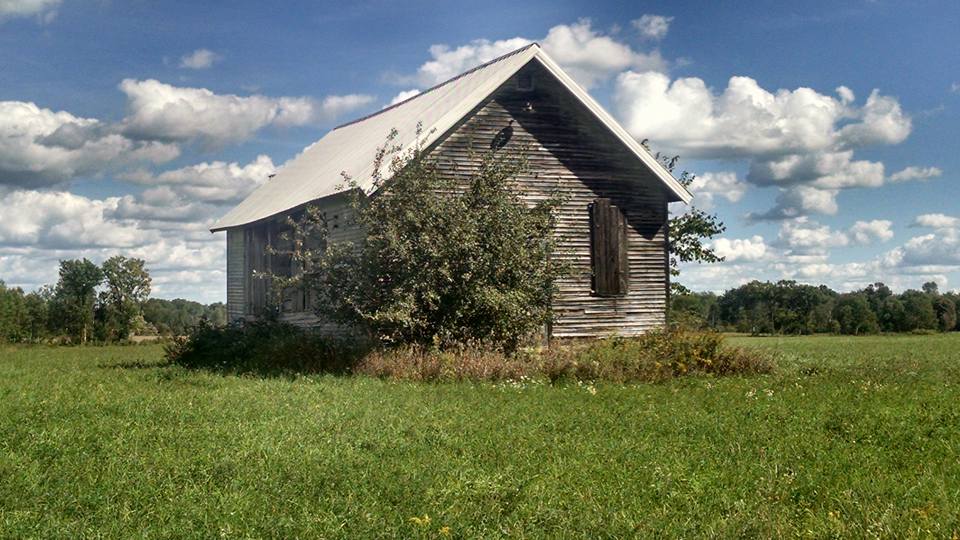
All that’s left here is an old school house in the middle of a field, and a former church that’s now a private residence (to protect their privacy, we didn’t photograph it–plus, it really doesn’t resemble a church so much anymore).

14344814_10210079526762710_7868264590444965841_n

Almost nothing is known about Podunk–its inception or its end.  The thought is that it may have started as a lumbering community, turned to farming, and then just petered out over time.  Some online commentators have said there used to be a dance hall in town for entertainment, but that’s about all there is to know!  There’s no cemetery attached to the community that we could find.